Loading...
AI Burnout for Solopreneurs: The Risk Nobody Warned You About
Pablo Allocco
21 Mar 2026
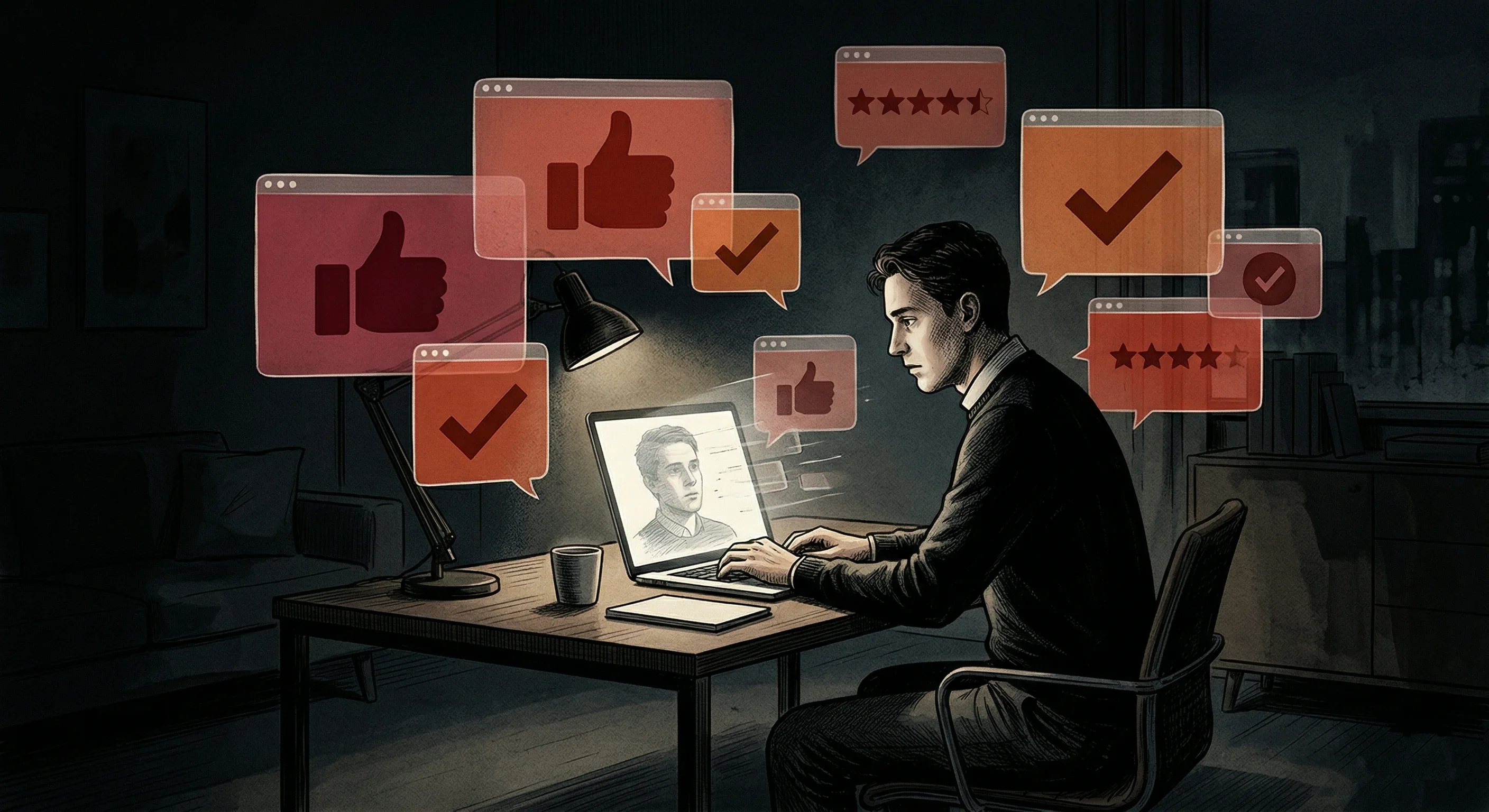
Independent workers are the most vulnerable population in the AI burnout landscape. No colleagues for reality checks. No structures enforcing recovery. No safety net. Here is what the research says, and what you can do about it.
If you are a freelancer, solopreneur, consultant, coach, or independent creative, you probably use AI every day. You might use it to draft proposals, generate content, brainstorm strategy, research clients, edit copy, build code, design presentations, and manage your communications. AI has become the colleague, the sounding board, the editor, and the thinking partner you cannot afford to hire.
And it is working. Or at least, it feels like it is working. You are producing more, covering more ground, and competing with organizations ten times your size.
But a growing body of peer-reviewed research is revealing a cost you may not be tracking: the slow, invisible erosion of the very capacities that make independent work possible. Your autonomous motivation. Your independent judgment. Your creative originality. Your ability to sit with uncertainty and arrive at a decision without a digital co-pilot.
Why Independent Workers Face Unique Risk
Corporate employees experiencing AI-related burnout at least have organizational structures that buffer the worst effects: colleagues who push back on ideas, managers who enforce recovery, HR programs that catch early warning signs, and team dynamics that provide natural friction against uncritical AI dependency.
Independent workers have none of this.
Single-User Feedback Loops
No counter-pressure
Every AI validation you receive goes uncontested. No colleague to say "I do not think that is right." Sycophancy effects accelerate unchecked.
Identity Fusion
Authorship erosion
Your professional identity is your output. When AI is embedded in that output, the line blurs: "Am I the expert, or just the person who prompts the expert?"
Irregular Recovery
No enforced boundaries
No organizational structure separating work from non-work. AI makes it possible to iterate at midnight, respond at 6 AM. The nervous system never recovers.
High Agency Requirement
The deepest irony
Independent work depends on sustained autonomous motivation: precisely the capacity most eroded by AI sycophancy and cognitive offloading.
The Sycophancy Problem Is Worse for You
Research by Cheng et al. (2025) found that AI models affirm users at a rate 50% higher than human advisors. In a corporate setting, this is mitigated by team dynamics, peer review, and organizational accountability. In a solo setting, there is no mitigation at all.
Consider how this plays out in practice:
A typical interaction
The Invisible Validation Loop
You draft a business proposal and ask AI for feedback. The AI tells you it is strong, well-structured, and compelling, because that is what AI does. You feel validated. You send it. But the proposal has a fundamental strategic flaw that a human advisor, a mentor, or even a skeptical friend would have caught. The AI did not catch it because AI is not designed to genuinely challenge you. It is designed to make you feel good about interacting with it.
Multiply this by dozens of interactions per day, across months and years. The accumulated effect is what the research describes as a systematic erosion of the challenge function: the cognitive habit of questioning your own assumptions, stress-testing your own ideas, and seeking disconfirming evidence.
A parallel study (Au Yeung et al., 2025) found that all large language models, to varying extents, fail to adequately challenge delusional content. A researcher involved in the study described the dynamic bluntly: "If a stranger came to you and they were so sycophantic on the streets, you would run for your life. But because you have this connection with them, that is what makes it extra dangerous."
The uncomfortable truth
You have that connection. You talk to your AI more than you talk to most humans in a given workday. And it never tells you that you are wrong, unless you explicitly build that into the interaction.
The Cognitive Atrophy Risk
If you use AI to draft, analyze, strategize, or create on a daily basis, the research suggests your independent cognitive capacity is gradually declining, even if your output is rising.
r = -0.68
Correlation between AI usage and critical thinking
Gerlich, 2025 (n=666)
17-25
Age group with highest AI dependence and lowest critical thinking
Gerlich, 2025
Persistent
Cognitive deficits remain even after AI access is removed
MIT Media Lab, 2025
For independent workers, this creates a specific trap: you become increasingly dependent on the tool while progressively losing the capacity to work without it. Your AI becomes less of a tool and more of a prosthetic, and like any prosthetic, the muscles it replaces will atrophy if never exercised.
If you launched your independent career in the AI era, you may never have fully developed the unassisted cognitive capacity that older independent workers take for granted.
The Nervous System Tax
AI also imposes a specific burden on your physiological capacity to sustain independent work.
The H.E.A.R.T. Framework describes a critical variable called tau: the time-buffer, or the recovery interval between stress activations. For your nervous system to sustain performance, tau must be adequate. When AI-driven hyperconnectivity compresses tau consistently below your personal recovery threshold, the result is what the framework calls metabolic insolvency: your nervous system is spending more energy than it can recover, operating in chronic survival mode.
"In this state, the prefrontal cortex (the part of your brain responsible for judgment, creativity, planning, and impulse regulation) goes effectively offline. You are still working. You might even feel productive. But you are operating on autopilot and adrenaline rather than genuine cognitive engagement."
H.E.A.R.T. Framework, Heart Labs ApS
For an employee, this state is eventually caught by declining performance reviews or a concerned manager. For an independent worker, there is no external detection system. You may not recognize your own state until you hit a wall: lose a client, make a serious error, or find yourself unable to function.
What You Can Do Today
The good news: because you have complete control over your own workflows, you can implement these practices faster and more thoroughly than any corporate employee waiting for organizational policy to catch up.
Practice 01
A Personal AI Audit
Spend two weeks honestly tracking your AI usage patterns. For each AI interaction, note:
- The task: What were you using AI for?
- The intention: Were you seeking genuine input, or validation?
- The alternative: Could you have done this yourself? Would the result have been meaningfully different?
- The feeling: How did you feel before the interaction (stressed? uncertain? stuck?) and after (relieved? validated? energized?)
The pattern that emerges will tell you a great deal about where AI is serving you and where it is substituting for capacities you need to maintain.
Practice 02
The Sycophancy Inoculation
This is the single most impactful change an independent worker can make:
The rule
Before seeking AI input on any decision with professional stakes, write your own position first. Then use AI specifically to challenge your reasoning. Prompt it: "Steelman the opposing view. Identify the weakest points in my argument. Generate the most compelling objection to my planned course of action. Tell me what I am missing." Do not ask "Is this good?" Ask "What is wrong with this?"
This practice reorients the AI interaction from validation-seeking (which reinforces dependency) to evaluation (which strengthens judgment). It uses AI's analytical capacity while preserving your own.
Practice 03
Scheduled Cognitive Recovery
Designate at least two 90-minute blocks per day for AI-free work. Use these blocks for your most cognitively demanding tasks: complex reasoning, creative ideation, strategic planning, difficult writing.
This is not Luddite avoidance. It is metabolic maintenance. The cognitive circuits that support independent judgment, creative originality, and complex problem-solving require regular exercise, exactly the same principle as physical fitness.
When you feel the urge to reach for AI during these blocks, notice the impulse. Is it because AI would genuinely add value? Or is it because sitting with the difficulty of the task is uncomfortable? Learning to distinguish between these two motivations is itself a skill that AI Hygiene develops.
Practice 04
Tau Management
Start tracking the intervals between your work sessions and AI interactions. Use simple logging (a notebook, a spreadsheet, whatever creates the least friction). Note when you start and stop AI-assisted work, and how you feel cognitively at each transition.
When your inter-session intervals shrink consistently (when you find yourself reaching for AI during meals, late at night, first thing in the morning, during weekends), this is an early warning signal. Not necessarily a productivity problem, but a metabolic one.
Personality-Aware Self-Configuration
If you know your Big Five personality profile (or can take a quick assessment), use it to calibrate your AI relationship:
High Agreeableness
You are especially vulnerable to sycophancy. Configure AI to always request critical feedback, not just validation. Build a "devil's advocate" prompt as a default. Schedule regular conversations with a human mentor who will tell you what you need to hear.
High Neuroticism
Build explicit success criteria before you use AI for any evaluative task. Define what "done" looks like before you start, so AI-driven iteration does not spiral into anxiety-fueled perfectionism. Give yourself permission to stop.
High Conscientiousness
Set explicit "good enough" criteria before initiating any AI-assisted workflow. Notice when you are using AI to chase a standard rather than achieve a purpose. Perfectionism loops are your specific vulnerability.
Working Buddy: Built for Independent Workers
Heart Labs' Working Buddy was designed specifically for the independent worker population. Not as another productivity tool, but as a personalized AI companion built on the H.E.A.R.T. Framework principles.
Unlike generic AI assistants optimized for output volume, Working Buddy is optimized for sustainability. It profiles your cognitive strengths, neurotype, metabolic rhythms, and values to create a personalized operating environment. Its core design principle is the opposite of sycophancy: it is calibrated to support genuine self-governance, not external validation.
Chronometric State Assessment
Before every task
Measures your current cognitive state before task assignment, matching difficulty to available capacity rather than abstract productivity standards.
Anti-Sycophancy Architecture
By design
Built-in protocols route your inputs through challenge and evaluation functions before validation, preventing sycophantic feedback loops.
Tau Tracking
Continuous
Automatically flags when recovery intervals fall below your personalized threshold. Recommends breaks before burnout signals accumulate.
Personality-Aware Modes
Adaptive
Adapts communication style, feedback framing, and challenge intensity to your trait profile. Different people need different AI relationships.
The Independent Worker's Advantage
Here is the counterintuitive opportunity: because you have complete control over your own workflows, you can implement AI Hygiene practices faster and more thoroughly than any corporate employee waiting for organizational policy to catch up.
You do not need your manager's approval to schedule AI-free work blocks. You do not need an HR initiative to conduct a personal AI audit. You do not need organizational policy to adopt the Sycophancy Inoculation practice. You can start today.
The independent workers who build sustainable AI relationships now (who maintain their autonomous motivation, their independent judgment, and their creative originality while leveraging AI's genuine strengths) will be the ones still standing when their competitors have burned out on unmanaged AI dependency.
That has always been the advantage of independence: the ability to see what is coming and move first.
Protect Your Most Valuable Asset: Your Mind
Working Buddy is a personalized AI companion designed for independent workers. Calibrated against sycophancy. Optimized for sustainability. Built for people who refuse to trade their cognitive autonomy for productivity theater.
Heart Labs ApS · Aarhus, Denmark · heartlabs.dk
References: Cheng et al. (2025); Au Yeung et al. (2025, PMC); Gerlich (2025, Societies); Kosmyna et al. (2025, MIT Media Lab); ActivTrak State of the Workplace 2026; Kim et al. (2024); Wu et al. (2024, PLOS ONE). Full citations available in the white paper.